Kinship
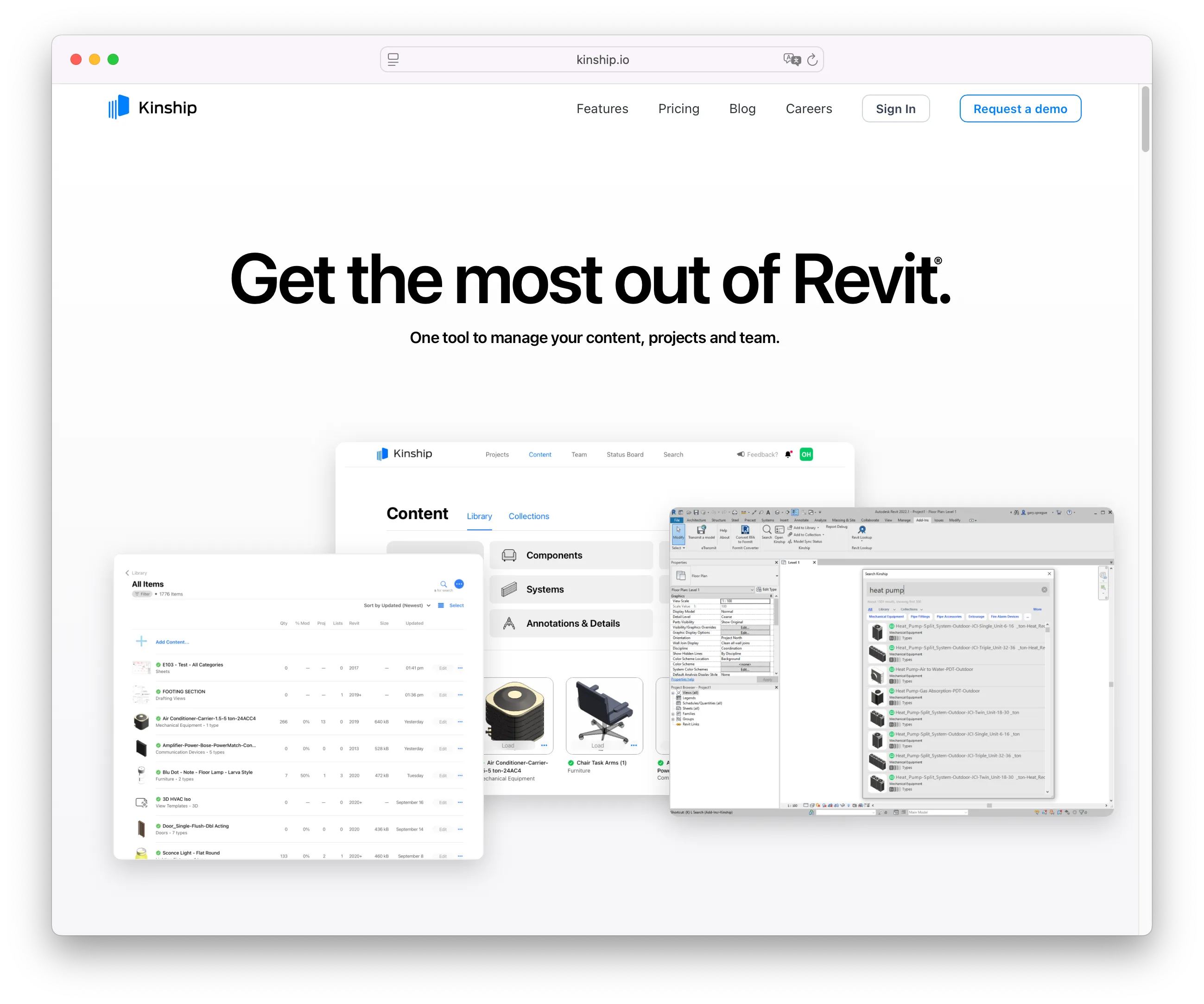
A service for content, projects, and team management in Revit. I focused on stability, delivery speed, and the infrastructure needed to support a growing product.
Migrate to AWS
I migrated all Kinship services from a dedicated server to AWS, planning the rollout, executing the migration, and establishing the new operational playbook for the team.
Create automated tests and CI
I created automated tests that developers could run locally to ensure their changes didn’t break the service. I also built and integrated a CI system that runs all tests after each commit and notifies developers if any fail, setting a consistent quality bar for the whole engineering team.
Improve service health checks
To respond quickly to code errors and service failures, I integrated AWS CloudWatch. It tracks various metrics and notifies developers when something doesn’t work as expected, reducing bug-fixing time. This gave the team operational visibility without relying on manual checks.
Automate server management
As the number of servers grew, manual management became impractical. I automated server management using Ansible, so with just one command new changes could be deployed to all servers. The same command could also be used to deploy a local VM similar to production for development. That made it easier for new engineers to onboard and ship safely.
Optimize loading speed
I helped track down bottlenecks and optimized both code and infrastructure to fix them. This allowed Kinship to serve more requests without upgrading hardware.
Technologies used:
- PHP,
- Python,
- MySQL,
- AWS,
- Docker,
- Ansible.